

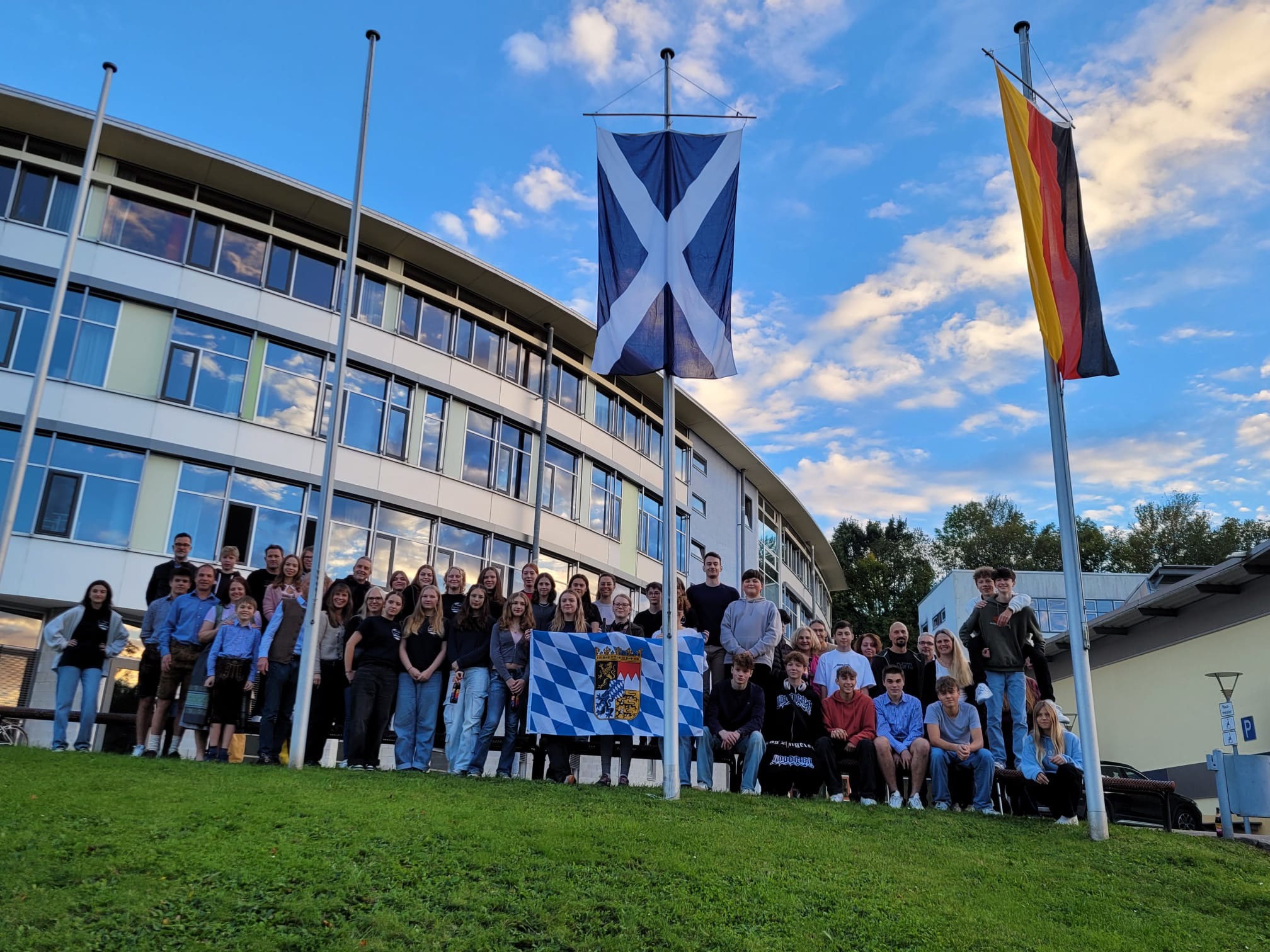
Reigniting a Scottish-Bavarian Link
Two schools revived their dormant school partnership and organised their first exchange since the pandemic - discover the impact of the trip below.
Who: James Gillespie’s High School and Halltertau-Gymnasium
How do attitudes to sustainability differ between Scotland and Bavaria? Pupils from James Gillespie’s High School and Halltertau-Gymnasium explored environment and sustainability on their exchange visit in Bavaria in Autumn 2024.
The pupils took part in excursions and activities that contributed to their understanding of sustainability. This included a scavenger hunt task in Munich, an educational boat trip on the Danube River, which inspired a heightened respect for the environment, and a tour of the Tropfsteinhöhle Schulerloch for students to learn about geology and environmental preservation. Pupils also learnt about how the recycling systems differ in the two countries – with examples such as the Pfand recycling programme in Germany.
Additionally, the pupils visited Schloss Neuschwanstein and rode the Rodelbahn – the popular toboggan run that they all decided to ride more than once! Pupils also visited Dachau Concentration Camp, reflecting on its history and the significance of remembrance for preventing future atrocities.
The exchange culminated in a project day, during which pupils researched sustainability and worked collaboratively in both English and German. They also presented their ideas and learning outcomes to the rest of the group. On the final night of the trip, the host families organised a farewell party to celebrate the exchange, with the Scottish pupils experiencing Bavarian traditions, food, and traditional dress.
On the trip, pupils enhanced their language skills, developed adaptability and self-confidence through overcoming language barriers, and gained a deeper understanding and appreciation of the similarities and differences between the two countries.
This support enabled us to have an educational, diverse and exciting itinerary, while the focus of the project encouraged collaboration, cooperation and communication between our young people in both languages.
Pupils developed strong friendships during the trip, and many have since maintained contact with plans to meet up during the school holidays. To share their experience with other classes, UK participants gave presentations on their highlights from the trip and why they would recommend going on the exchange. The trip and the project outcomes will be publicised at both schools and planning for the next exchange has already begun.
We are genuinely very proud of all the pupils – both for how they engaged with the project, but also how they conducted themselves and embraced the new culture and language with enthusiasm and an open mind. We know that the memories and life lessons stay with them for a long time to come.
This exchange was supported by the Instant Impact grant.