

Opportunities: Group: England
UK-German School Partnership Seminar (November 2026 in Würzburg)
What is it about?
This event will bring together teachers from the UK and Germany to establish linking opportunities within a framework to develop international activities and projects within the wider school curriculum. Teachers will be provided with support, information and guidance in forming connections to enhance and embed an international ethos within their schools and communities.
The seminar includes school visits to gain insights into school life in Germany and cultural activities such as the Würzburger Weihnachtsmarkt.
- Open to applicants from:
- All UK
- England
- Northern Ireland
- Scotland
- Wales
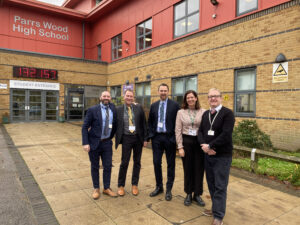
20 Years of UK-German Connection: Parrs Wood High School and Otto-Hahn-Gymnasium’s Partnership
What began as an invitation from the British-German Association to digitally connect two schools quickly developed into something deeper with both schools recognising that their pupils would benefit far more from an in-person cultural exchange.
Each of our three exchanges to date have centred around a theme rooted in the cultural and historical context of both regions.
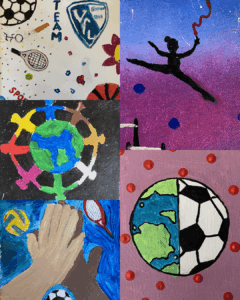
The first explored the working world through time, helping pupils understand how industrial heritage shaped identity. The second examined sports and their significance for society and personal identity. Students worked in mixed-nationality groups on a collaborative art project, producing canvases that reflected their experiences of sport in both countries which form a mural displayed in both schools.
Alongside this creative work, students visited the German Football Museum in Dortmund and the Sports Museum in Cologne, took part in debates about inclusion and diversity in sport, and joined outdoor teambuilding challenges. These activities helped pupils form friendships, gain confidence, and build a real sense of connection beyond borders. Daily journaling and reflection sessions encouraged students to explore cultural differences and similarities more deeply, reinforcing the learning that took place throughout the visit.
The current third exchange cycle Nature vs. Industry? Understanding How They Work Together continues this rich, exploratory approach. From cave visits in the Peak District, exploring waterways in Manchester and examining industrial impact on oceans at the Blue Planet Aquarium, pupils are discovering the links between geography, industry, and sustainability. A planned visit in 2026 to the Mining Museum in Bochum, the Schwebebahn and Zoo in Wuppertal will allow German students to draw parallels with their own regional heritage.
The partnership is sustained not only through annual visits, but also through pen-pal exchanges, digital communication, collaborative projects, and opportunities such as the CertiLingua (think European EPQ) and international work experience. For staff, this has grown into friendship—regular visits, strong family connections, a shared sense of working across two countries, made possible through the Host a Teacher from Germany Programme. It has also strengthened language skills and deepened cultural empathy.
The impact across both school communities is significant. Parrs Wood, a large and proudly diverse school, has seen how the exchange broadens horizons for pupils from many cultural, linguistic, and religious backgrounds. The project has been shared across the Greater Manchester Educational Trust, inspiring other schools and helping Parrs Wood position itself as an advocate for UK–German partnerships.
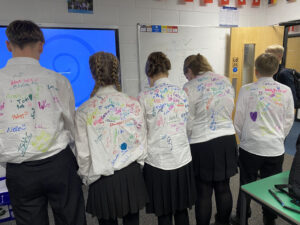
The highlights of the partnership speak for themselves: the anticipation surrounding every exchange, the creativity of the collaborative art project, the laughter during teambuilding activities, and the emotional moments—shirt-signing and tears—when students parted. With plans for future exchanges already taking shape, the partnership is set to continue flourishing, fostering friendship, cultural understanding, and unforgettable experiences.
For schools considering starting their own exchange, the British Council’s International Visits Toolkit and Annex D of Keeping Children Safe in Education are valuable starting points.
Supported by Partnership Visit Fund and Instant Impact.
- Open to applicants from:
- England
- Open to:
- Secondary Schools
- Secondary Teachers
- Relevance:
- Secondary Schools
20 Years of UK-German Connection: From Language Assistant to German Teacher
Seven years ago, I had planned to stay in the UK and work as a Language Assistant in a school in England for one year. During that year, I became a UK-German Connection Cultural Exchange Ambassador and had the opportunity to collaborate with a Language Assistant in Germany to plan a joint project between our two schools.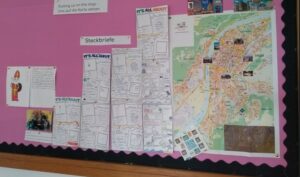
Little did I know then that this experience would change my life so profoundly. It gave me a great deal of confidence and helped me decide to remain in England a little longer. I applied for teacher training and have now been working as a German teacher for six years.
UK-German Connection remains an important part of my life – but now, they are supporting my students. Over the past three years, we have had the privilege of sending students to Germany to take part in the fantastic summer programmes organised by them.
The highlight for me is seeing my students return after the summer, full of enthusiasm and visibly more confident – not only in their language skills, but also in themselves.
My favourite moment came from a student who took part last summer, who said:
“I found my time in Germany to be two of the best weeks I’ve had in my life […] The trip changed my perspective on youth exchange trips – I never realised how enriching spending just two weeks in another country could be. From increasing intercultural awareness amongst young people, as well as developing our own characters. I loved having the opportunity to talk with German teenagers and learning more about myself in a foreign environment. I made a lot of friends – in fact, I hope to go back there next summer!”
Cultural Exchange Ambassadors are English & German Language Assistants working in the other country. The programme provides Ambassadors with the opportunity to meet each other, partner up and run bilateral projects together.
- Open to applicants from:
- England
- Relevance:
- Secondary Schools
The Environment, Peace, and Music
Who: Jugendorchester Stadt Karlsruhe (JOK) and Nottingham Music Service’s Robin Hood Orchestra (RHYO)
Participants: orchestra members of 12 – 20 year olds
Project theme: Exploring the environment, peace and conflict through music
Outcomes:
- Successful collaboration between the orchestras in rehearsals and activities, culminating in joint concerts showcasing their work.
- Reflections and developing of understanding of the music industry and its impact on the environment and peace.
- Strengthening of youth partnership, with future visits planned.
Grant: Instant Impact Plus
Residential in the Black Forest
Nottingham Music Service’s Robin Hood Orchestra (RYHO) and Jugendorchester Stadt Karlsruhe (JOK)’s partnership goes back to 2009. The orchestras meet regularly either in Germany or England, and 2024’s exchange was a joint trip to the Black Forest, with the final days spent in Karlsruhe.
This year’s exchange set out to provide a rich, cultural experience to the orchestra members that enhanced their musical talents through rehearsals ahead of a joint concert, whilst also exploring the topic of the environment and global warming through thematic workshops and activities. This incorporated their passion for music by examining the music industry and its impact on the environment. They also looked at themes of peace and cooperation in Europe.
For the first three days, the two orchestras stayed together in a youth hostel in the Black Forest, involving rehearsals, sightseeing, hikes, and thematic discussions and workshops. There was time for informal activities for the young people together to know one another and form friendships, such as by singing by a bonfire!
“I really enjoyed how for the first few days when we were in the Black Forest, we had rehearsals every evening. I mean at the time I would think I’m tired, but it gave me time to talk to the players around me and get to know them better.”
Despite that they only had a few days together to practise their orchestral arrangements, the orchestras put on remarkable performances at venues such as St Konrad’s Church, with the Mayor of Karlsruhe in attendance. The joint rehearsals allowed the players to learn from one another and experience different conducting styles and exercises.
The Environmental Impact of the Music Industry
Throughout their discussions on the environment and the music industry, the young people focused specifically on music tours. They discussed the disadvantages, such as the fuel emissions and increase in single-use packaging, and also highlighted the benefits of music tours, such as boosts to local economies, and a more varied cultural representation in the arts. They compiled a set of key recommendations for reducing environmental impact, including using transport options that have a small carbon footprint, encouraging climate-friendly diets, and improving infrastructure for cycling.
On the topic of peace, they examined the root of conflict and considered how music can promote unity by bringing people together, and developed ideas on how to promote this further. Their recommendations included further collaboration between youth orchestras across Europe and diversifying repertoires and music styles performed, whilst overall incorporating cultural learning into school and improving access to music education. Their ideas hopefully will have long-lasting impacts, as they will be shared with local council officials in Nottingham and Karlsruhe.
“I think I have an improved sense of adaptability in getting used to a different rehearsal environment, with new people and a different conductor. I’ve learnt a lot about German customs and specific information about the country, e.g. their recycling system, which has been an interesting insight into how a different country is trying to reduce waste.”
The residential experience in the Black Forest brought the young people together to learn about each other’s cultures, daily life, and perspectives on the chosen topics. This led to the young people developing their confidence, self-esteem, and overall resilience when presented with new situations. Additionally, they enhanced their musical talents through the joint rehearsals and learning from one another about different genres and styles.
Since the exchange, the participants have kept in touch digitally. Not only was this a worthwhile experience for the young people involved, the exchange has been pivotal in strengthening ties between the partner orchestras and the return visit is already planned.
“Young people from RYHO and JOK benefited from discussing topics important to them, sharing their perspectives and gaining insight into others’ opinions and ideas.”
- Open to applicants from:
- England
- Open to:
- Youth
- Relevance:
- Youth Groups
European Youth Engagement in Heritage
Who: Young Producers (Tees Valley Museums) and Critical Young Friends (Jugend Museum Schöneberg, Berlin)
Participants: museum youth group for 16-25 year olds
Project theme: youth engagement in heritage
Outcomes:
- Increased awareness and understanding of the heritage sector in Europe.
- Development of communication, critical thinking, and presentation skills.
- Collaboration with partners digitally and in-person, with inspiration sparked for a UK event.
Grant: Instant Impact Plus
A New Partnership
An interest in connecting with like-minded young people to establish an exchange blossomed into a new partnership between two museums’ youth groups. After researching different museums across Europe, the Young Producers connected with Critical Young Friends due to their shared passion for history. This digital link led to an invitation to Critical Young Friends’ conference on young people and museums, and to participate on a panel.
The aim of the visit was to gain new insights on youth engagement in museums, culture and heritage, whilst encouraging collaboration to strengthen the new youth partnership. Prior to the visit to Berlin, participants got to know one another via
video calls and Café Connect.
Visiting Berlin
During the conference, the young people engaged in many workshops and activities on youth participation, discussing barriers to engagement and how different museums across Europe are responding to this.
They also took part in city tours led by their exchange partners, and visited other museums to expand on their knowledge of German history and culture. One exhibition called “Protest”, co-designed and curated by their partners, sparked ambitious ideas for designing their own exhibit in the UK.
“I enjoyed meeting other youth groups the most as it gave me insight into how they interact with their own heritage and culture. It also gave us a great chance to discuss different ideas for our respective museums and galleries as well as talking about the struggles we each face.”
The exchange developed the Young Producers’ knowledge and understanding of youth engagement in museums through sharing their experiences and learning from their peers. They enhanced their critical thinking skills and cultural awareness through comparing the heritage sectors on an international level. Through leading workshops and engaging with their partners, the participants developed their communication and presentation skills.
Future Plans
Since the visit, the youth groups have stayed in touch by working together on digital projects. The Young Producers are also planning to organise their own conference whilst hosting their exchange partners for the return visit.
“I enjoyed the most getting to meet new people and spend time with people I wouldn’t normally have a chance of meeting/spending time with. I loved every moment of it and can’t even put into words how grateful I am that we get opportunities like this.”
- Open to:
- Youth
- Youth Workers
- Relevance:
- Youth Groups
Waldorf education in Germany – a UK teacher’s experience
Curious about the Waldorf approach in German education, a teacher from Farlingaye High School, England, visited Freie Waldorfschule in Leipzig, Saxony. Observing language teaching in an alternative education setting, in particular, inspired her own teaching and made her want to share her experience with colleagues back home. The city of Leipzig itself was the perfect place to gain a deeper understanding about East Germany, which she was able to incorporate into her A-Level teaching.
Whilst at Freie Waldorfschule, the teacher engaged in many different activities:
- Led a poetry workshop for Sixth Form students
- Taught lessons to classes on London as a tourist attraction
- Observed English lessons for various year groups, including speaking games-based lessons using songs and poems, and creative ways of teaching grammar.
- Observed a Sixth Form lesson on critically examining cartoons criticising the American dream, as well as a lesson with students delivering presentations on UK culture
- Compared approaches to lesson planning in UK mainstream schools and the Steiner school context
- Engaged in discussions on how to introduce students to more challenging literary texts
- Talked about the use of technology in school, accountability culture in UK schools in comparison to Steiner schools, as well as the challenges pupils face post-pandemic
- Established a letter exchange between students
I am extremely grateful for the opportunity. I have come away inspired! […] A fantastic opportunity to update language and general teaching and learning skills and to reflect on your own teaching practice, by critically evaluating it against the context of the school visited.
The visit had a wide-reaching impact. The teacher was able to critically reflect and modify some of her approaches to behaviour management by observing student-teacher interactions in a school environment that encouraged cooperation.
Through classroom shadowing, the teacher developed her repertoire of teaching activities, especially games and speaking activities, and has considered how to teach literature to A-Level students. Visits to local museums also led to reflections on how to pass on her knowledge and new insights about recent German history and current affairs to pupils.
Within the Modern Languages department, the teacher delivered a talk to colleagues on the innovative teaching and learning tasks she had observed during her visit. Furthermore, as SCITT Subject Lead she has incorporated these insights into professional development sessions for student teachers.
Looking forward, the visit to Freie Waldorfschule (and especially the letter exchange set up) have laid the foundations for the continuation of a new link between the schools. The pen-pal exchange is envisioned as a long-running project for future year groups, and the teachers involved have also discussed a return visit.
Top tip for applicants: find a school that offers something that you are particularly interested in. For me, this was Steiner education.
The Professional Enrichment Programme is a funded opportunity for qualified UK teachers of any subject and school type to visit a German school in-person for one or two weeks.
- Open to applicants from:
- All UK
- England
- Northern Ireland
- Scotland
- Wales
Language Teacher Training Scholarships
Are you ready to inspire future generations of linguists with your passion for languages? And to begin a rewarding career as a Modern Foreign Languages teacher? The British Council is awarding scholarships, continuing professional development support and £22,000 of funding to talented individuals training as a languages teacher in the academic year 2026-27.
- Open to applicants from:
- All UK
- England
- Northern Ireland
- Scotland
- Wales
- Open to:
- Language Assistants
- Students
- Trainees
e-Space: Bilateral Virtual Exchange
This virtual exchange programme promotes digital collaboration between pupils through exciting, easily accessible learning resources and mini projects and supports existing or new partnerships when in-person visits are not possible and/or to keep contact active in-between visits. The programme launched in February 2025.
Register your interest now and we will contact you with further details and upcoming information webinars.
*e-Space is run in collaboration with the Goethe-Institut London and is offered as part of UK-German Connection’s contribution to the Gimagine project.
- Open to applicants from:
- England