

Opportunities: Group: Secondary Schools
UK-German School Partnership Seminar (November 2026 in Würzburg)
What is it about?
This event will bring together teachers from the UK and Germany to establish linking opportunities within a framework to develop international activities and projects within the wider school curriculum. Teachers will be provided with support, information and guidance in forming connections to enhance and embed an international ethos within their schools and communities.
The seminar includes school visits to gain insights into school life in Germany and cultural activities such as the Würzburger Weihnachtsmarkt.
- Open to applicants from:
- All UK
- England
- Northern Ireland
- Scotland
- Wales
UK-German Study Visit
What is it about?
This funded opportunity will bring together teachers from the UK and Germany to explore and discuss the implementation of curriculum relevance within an international framework.
This professional development offer is open to teachers of all subject areas from primary, secondary and SEN schools with no active UK-German school partnership. German language skills are not required and your school does not need to offer German as a subject in order to take part.
The study visit is funded and organised by UK-German Connection in collaboration with an external course provider, LFEE.
- Open to applicants from:
- All UK
- Relevance:
- Primary Schools
- Secondary Schools
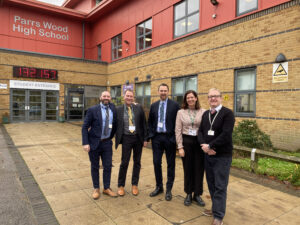
20 Years of UK-German Connection: Parrs Wood High School and Otto-Hahn-Gymnasium’s Partnership
What began as an invitation from the British-German Association to digitally connect two schools quickly developed into something deeper with both schools recognising that their pupils would benefit far more from an in-person cultural exchange.
Each of our three exchanges to date have centred around a theme rooted in the cultural and historical context of both regions.
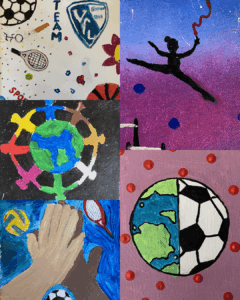
The first explored the working world through time, helping pupils understand how industrial heritage shaped identity. The second examined sports and their significance for society and personal identity. Students worked in mixed-nationality groups on a collaborative art project, producing canvases that reflected their experiences of sport in both countries which form a mural displayed in both schools.
Alongside this creative work, students visited the German Football Museum in Dortmund and the Sports Museum in Cologne, took part in debates about inclusion and diversity in sport, and joined outdoor teambuilding challenges. These activities helped pupils form friendships, gain confidence, and build a real sense of connection beyond borders. Daily journaling and reflection sessions encouraged students to explore cultural differences and similarities more deeply, reinforcing the learning that took place throughout the visit.
The current third exchange cycle Nature vs. Industry? Understanding How They Work Together continues this rich, exploratory approach. From cave visits in the Peak District, exploring waterways in Manchester and examining industrial impact on oceans at the Blue Planet Aquarium, pupils are discovering the links between geography, industry, and sustainability. A planned visit in 2026 to the Mining Museum in Bochum, the Schwebebahn and Zoo in Wuppertal will allow German students to draw parallels with their own regional heritage.
The partnership is sustained not only through annual visits, but also through pen-pal exchanges, digital communication, collaborative projects, and opportunities such as the CertiLingua (think European EPQ) and international work experience. For staff, this has grown into friendship—regular visits, strong family connections, a shared sense of working across two countries, made possible through the Host a Teacher from Germany Programme. It has also strengthened language skills and deepened cultural empathy.
The impact across both school communities is significant. Parrs Wood, a large and proudly diverse school, has seen how the exchange broadens horizons for pupils from many cultural, linguistic, and religious backgrounds. The project has been shared across the Greater Manchester Educational Trust, inspiring other schools and helping Parrs Wood position itself as an advocate for UK–German partnerships.
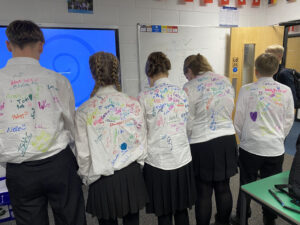
The highlights of the partnership speak for themselves: the anticipation surrounding every exchange, the creativity of the collaborative art project, the laughter during teambuilding activities, and the emotional moments—shirt-signing and tears—when students parted. With plans for future exchanges already taking shape, the partnership is set to continue flourishing, fostering friendship, cultural understanding, and unforgettable experiences.
For schools considering starting their own exchange, the British Council’s International Visits Toolkit and Annex D of Keeping Children Safe in Education are valuable starting points.
Supported by Partnership Visit Fund and Instant Impact.
- Open to applicants from:
- England
- Open to:
- Secondary Schools
- Secondary Teachers
- Relevance:
- Secondary Schools
20 Years of UK-German Connection: From Language Assistant to German Teacher
Seven years ago, I had planned to stay in the UK and work as a Language Assistant in a school in England for one year. During that year, I became a UK-German Connection Cultural Exchange Ambassador and had the opportunity to collaborate with a Language Assistant in Germany to plan a joint project between our two schools.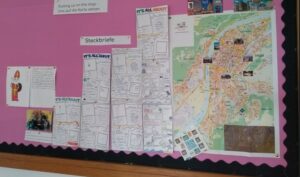
Little did I know then that this experience would change my life so profoundly. It gave me a great deal of confidence and helped me decide to remain in England a little longer. I applied for teacher training and have now been working as a German teacher for six years.
UK-German Connection remains an important part of my life – but now, they are supporting my students. Over the past three years, we have had the privilege of sending students to Germany to take part in the fantastic summer programmes organised by them.
The highlight for me is seeing my students return after the summer, full of enthusiasm and visibly more confident – not only in their language skills, but also in themselves.
My favourite moment came from a student who took part last summer, who said:
“I found my time in Germany to be two of the best weeks I’ve had in my life […] The trip changed my perspective on youth exchange trips – I never realised how enriching spending just two weeks in another country could be. From increasing intercultural awareness amongst young people, as well as developing our own characters. I loved having the opportunity to talk with German teenagers and learning more about myself in a foreign environment. I made a lot of friends – in fact, I hope to go back there next summer!”
Cultural Exchange Ambassadors are English & German Language Assistants working in the other country. The programme provides Ambassadors with the opportunity to meet each other, partner up and run bilateral projects together.
- Open to applicants from:
- England
- Relevance:
- Secondary Schools
20 Years of UK-German Connection: Ben’s Experience
My journey with UK-German Connection started shortly after I had begun learning German at school, almost a decade ago. I was lucky enough to be selected for the German Pupil Courses in 2016 after beginning my German GCSE, having never been abroad before that year. I had enjoyed my German lessons up to that point, but it was having the chance to visit the country and stay with a host family that I really began to appreciate how important it would be for me to keep learning German.
It was a very interesting time to visit Germany, as that summer the EU Referendum was held. I can still vividly remember the surprise of the local Germans that our UK group was so interested in visiting Germany and learning the language, and I felt quite sad that as a nation we were giving off that impression. At that point in my life, I felt I had never connected with a group as strongly as with the other participants of the course, which is something I have continued to experience the more I have engaged with UK-German exchanges. Our shared interest in each others’ cultures, languages and histories meant that the conversations flowed freely in both languages and I felt for the first time that this could be something I ‘could do’ with my life.
While I was enjoying exploring Germany for the first time, I don’t think I realised how important what we were doing was, especially during a time of uncertainty. Now in my current role as an MFL teacher, I see every day how pupils struggle to conceive how learning German is a useful thing, or something they should want to do. Being able to travel, and realising for yourself first-hand the benefits that language learning brings is something every pupil should be able to experience. It is difficult, even unfair, to expect school pupils to believe us telling them how wonderful learning another language is when they can’t easily see the benefits for themselves. When I was still in high school, my MFL teacher used to tell me all about her experiences living and working in Berlin, and I always found it fascinating yet daunting and wondered how anyone could ever manage to live in another country. Without the opportunities that UK-German Connection gave me and other young people, it would probably remain so for me. My dad tells me often that when I started to consider studying languages after my GCSEs, I had said I wanted to find courses at a university where I would not have to study abroad, because it would have been too much for me. By the time I actually made it to university, I was very glad to have the opportunity to do a year abroad.
Since embarking on that German Pupil Course in 2016, I have returned to Germany both on holiday and as part of my studies. German cities such as Hamburg and Freiburg (where I regularly attend football matches!) are some of my favourites in the world. I have returned to Germany through UK-German Connection opportunities at least four more times. The once crazy idea that I might live or work abroad is not only much more conceivable, but I’ve also already done it!
With all the ease of staying connected digitally with people and accessing content from all over the world, it is still unfortunately very difficult for many young people to have access to real experiences abroad. As a German Pupil Course Group Leader this summer, I noticed there were quite a few participants who, like me in 2016, were seeing Germany for the very first time. Seeing how quickly and deeply these pupils connected with each other was very moving in that it reminded me that no matter how much things have changed since 2016 – both for me and for the world – some things stay the same. Experiences like the German Pupil Courses will always be meaningful for pupils, as they are provided with the ability to visualise and imagine the real-world implications of learning a language, and the possibility of living or working in another country.
As I said in my vote of thanks at the end of my first German Pupil Courses as a Group Leader, I would not have been there without the experiences I had with UK-German Connection as a pupil. I was very happy to see the core mission of helping to build a brighter future for UK-German relations through connecting young people remains central. Now going through a very transitional and uncertain time, I find comfort in being certain that language learning, and showing others how languages help us connect with people, will always be at the heart of everything I do.
It can seem like a very small thing to send 12 pupils to Germany for 2 weeks, but the fact that the programme has carried on all this time has given so many young people the chance to see first-hand what language learning can do for them.
- Open to applicants from:
- All UK
- Open to:
- Secondary Pupils
- Relevance:
- Secondary Schools
20 years of UK-German Connection: Harmonize Academy’s Story
How it all started
I came across UK-German Connection while I was checking for funding and grants available for UK teachers. I was directed to their website and had a browse around, and the Professional Enrichment Programme caught my attention, which I successfully applied for.
Through the programme I visited Realschule auf dem Röddenberg, and since then the school has paid a similar visit to Harmonize Academy, where a Partnership agreement was signed in June 2025. The visit marked a significant milestone in international collaboration, as a special agreement was signed between both schools, laying the foundation for future exchanges, joint projects, and shared learning opportunities.
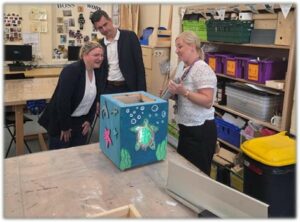 During Realschule auf dem Röddenberg’s time in the UK, the visiting teachers toured Harmonize Academy, engaging with staff and students while observing the school’s inclusive educational approach. They expressed admiration for the supportive environment and innovative teaching methods that define Harmonize’s ethos.
Beyond the classroom, the German educators experienced the rich cultural heritage of Liverpool. They visited several of the city’s iconic landmarks, including the Royal Albert Dock, The Beatles Story, and Liverpool Cathedral. These excursions provided insight into Liverpool’s vibrant history and community spirit.
The newly-signed agreement reflects a commitment to fostering international understanding and collaboration. Both schools look forward to future exchanges that will provide valuable educational and cultural experiences for students and staff alike. This visit not only strengthened institutional ties but also inspired a shared vision for inclusive, globally-minded education.
Both schools have agreed to move our partnership forward by holding an online session where students from Harmonize Academy will learn some basic German. This will create a platform where students from both schools will start familiarising themselves with one another.
Since both teachers have visited each other, it was agreed that Realschule auf dem Röddenberg will visit us with 16 students in the summer of 2026, with a return visit in the following year 2027.
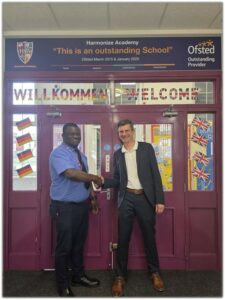 The highlight so far is our partnership is thriving well and our advice to other teachers is to get involved, and there is always a school out there in Germany who are looking for a partnership school here in the UK.
It’s a win-win situation for both schools involved.
The Professional Enrichment Programme is a funded opportunity for qualified UK teachers of any subject and school type to visit a German school in-person for one or two weeks and engage in facilitated professional development in an intercultural context.
Interested in setting up a school or youth partnership but don’t know where to start? We offer tailored advice and support – find out more.
- Open to applicants from:
- All UK
e-Space: Bilateral Virtual Exchange
e-Space is our virtual exchange programme that promotes digital collaboration between pupils through exciting, easily accessible learning resources and mini projects. This offer supports existing or new UK-German partnerships, with UK-German Connection offering a partner-matching service for those without a partner institution in Germany.
e-Space includes free learning materials, resources and worksheets produced by the Goethe-Institut, tailored specifically to a UK-German audience and for pupils to work through together in pairs.
This opportunity is run in collaboration with the Goethe-Institut London and is offered as part of UK-German Connection’s contribution to the Gimagine project.
Register your interest in e-Space
- Open to applicants from:
- All UK
- Open to:
- Further Education Colleges
- Primary Pupils
- Primary Schools
- Primary Teachers
- Secondary Pupils
- Secondary Schools
- Secondary Teachers
- SEN
- Relevance:
- Primary Schools
- Secondary Schools
The Gimagine Award for Duke of Edinburgh Award
Discover the Gimagine Award, the first German learning programme to become an approved activity for the Duke of Edinburgh (DofE) Award skill section. This opportunity is for those learning German from scratch or those who want to improve their skills, with Friends of the Goethe-Institut UK (FGI-UK) now an Approved Activity Provider (AAP).
- Open to applicants from:
- All UK
- Relevance:
- Secondary Schools
- SEN
- Youth Groups
Ewro2025 Classroom Resource Pack
Developed by the British Council, in collaboration with the Football Association of Wales (FAW) and funded by the Welsh Government’s Euro 2025 Partner Support Fund, this resource supports key curriculum areas while promoting languages, gender equality and international collaboration. These free resources are suitable for pupils aged 9-13 and contains lesson plans, activities, and more to spark curiosity about other cultures and languages, develop intercultural skills, and knowledge on gender equality and female empowerment.
- Open to:
- Primary Pupils
- Primary Schools
- Primary Teachers
- Secondary Pupils
- Secondary Schools
- Secondary Teachers
- SEN
- Relevance:
- Primary Schools
- Secondary Schools
- SEN
Project inspiration: UK-German Exchange Fellowships (NRW)
The Exchange Fellowships programme offers UK pupils at secondary schools and FE colleges with a partner school in North Rhine-Westphalia (NRW) to carry out a project of their choice, whilst engaging in aspects of school life in Germany, attending lessons with their exchange partner, staying with a host family, and immersing themselves in the German language and culture.
The programme aims to provide pupils with a unique intercultural learning experience, contribute to pupils’ skills development, enhance the international perspective across the school, and strengthen the school partnership.
Examples of previous projects
Sustainability: Cycling – A Comparison
Partner schools involved: Twyford CofE High School, London, and Gesamtschule Hardt, Mönchengladbach/NRW
The participant (Year 10) investigated the differences in attitudes towards cycling and infrastructure in the UK and Germany. They analysed UK and German national policies and strategy plans, such as by comparing the National Cycle Network to Germany’s mapped pathways and highlighting differences. They engaged with their local communities by conducting a survey with participants from Mönchengladbach and Southeast England, asking individuals about their experiences with cycling. Additionally, the participant explored the positive and negative perceptions of cycling across different populations. Their research emphasised the importance of green environmental public spaces and the availability of public and private bike storage options for individuals for encouraging cycling uptake. The project was successful in offering a unique and thought-provoking insight into the UK and Germany’s cycling culture.
Skills for a global workplace: Digital learning – Comparing Germany and England
Partner schools involved: Huntington School, York, and Wilhelm-Hittorf-Gymnasium, Münster/NRW
Two tandem-partners (Year 11 and 10. Klasse) worked together to research the use of digital devices as learning tool in schools in Germany and England. They carried this out by surveying their peers, observing the use of technology in the classroom during their respective visits, and comparing this to national findings and policy. One key difference was the use of tablets and that each pupil in Wilhelm-Hittorf-Gymnasium had one on loan from school. Their efforts discovered that attitudes towards digital devices are popular in both countries. The participants came up with ideas based on their findings to improve digital learning, such as by downloading textbooks onto tablets, and allowing for homework to be submitted digitally.
Citizenship and democratic participation: Disability does not mean inability
Partner schools involved: Twyford CofE High School, London, and Gesamtschule Hardt, Mönchengladbach/NRW
The participant (Year 10) investigated measures that support disabled people in society, for example by comparing disabled parking spots availability and public transport in Mönchengladbach and London. The project also investigated the different ways disabled pupils are supported in the respective schools, evaluating their findings against national policies and guidance.
Sustainability: Young people’s attitudes towards the environment and climate crisis
Partner schools involved: Grosvenor Grammar School, Belfast, and Evangelisches Gymnasium, Lippstadt/NRW
Two tandem partners (Year 13/Northern Ireland and 11. Klasse) looked at the differences between German and British young people’s views towards the environment and the climate crisis.
The partners created a questionnaire that they used to collect qualitative data from their peers in Germany and Northern Ireland. Additionally, they created several short video clips that detailed some verbal responses to given questions. The partners were able to gather a range of different opinions, including reflections on the level of severity of conflict vs. climate crisis, through interviews, some of which they collated into a video clip.
The project had a wide impact on participating pupils in that it taught them more about the environment and that since the interview they have educated themselves to an extent they would not have before the project.
Overall, the outcome of this project allowed both partners to broaden their own horizons regarding the environment, whilst also raising awareness. The experience of planning and organising this project has allowed them to develop and refine many of their own personal skills, tools that will aid them in their career choices. Working on this project has benefitted them significantly and increased their enthusiasm to protect the environment and raise awareness about the many challenges facing our world in this current era.
Find out more about the Exchange Fellowships programme.
- Open to applicants from:
- All UK