

Opportunities: Group: Youth
20 Years of UK-German Connection: The Boys’ and Girls’ Clubs of Wales
20 Years of Building Bridges for Young People
We would like to congratulate UK-German Connection on reaching its remarkable 20th anniversary. The Boys’ and Girls’ Clubs of Wales are proud to have worked alongside UK-German Connection over many of these years, helping to create meaningful opportunities for young people from communities that often have limited access to international projects and European partnerships. This has included projects in 2008 and more recently in 2025.
The partnership developed from friendship between the organisations and the link was reignited during the recent exchange to Germany in summer 2025. During the exchange, the topics of identity and growing up in today’s world as a young person were explored, with group discussions and creative activities facilitating reflection. Despite the differences in geography, the participants faced common challenges and had similar perspectives on their experiences in their communities.
Through our exchange, countless young people have been given the chance to travel abroad for the first time, experience new cultures, and build friendships that transcend borders. It has also created lasting change in their outlook, confidence, and sense of belonging in a wider European community.
Our Youth Workers have witnessed first-hand how transformative these experiences can be. Hosting young visitors from Germany or travelling overseas themselves allows young people to discover shared interests; develop empathy, mutual respect and appreciation for cultural diversity; and gain the confidence to step beyond their comfort zones. Many participants stay in touch and forge friendships long after their exchanges.
International youth exchanges are powerful tools for personal development. They help young people gain essential life skills such as teamwork, problem-solving, leadership, and effective communication. These experiences contribute not only to educational attainment but also to employability, wellbeing, and social mobility.
For the Boys’ and Girls’ Clubs of Wales, being part of UK-German Connection’s journey has been both inspiring and rewarding. We have seen how the vision of building bridges between young people in the UK and Germany truly changes lives. As UK-German Connection celebrates 20 years of success, we are proud to celebrate alongside them and look forward to continuing this partnership that helps young people explore the world, celebrate diversity, and create connections that last a lifetime.
Supported by the Instant Impact grant.
- Open to applicants from:
- Wales
- Open to:
- Youth
- Youth Workers
- Relevance:
- Youth Groups
20 Years of UK-German Connection: Herne-Pontefract’s long-standing link
How it all began
The Herne–Pontefract partnership is a powerful example of how post-war reconciliation evolved into a four-decade friendship driven by youth work, shared learning, and international cooperation. It began in the 1950s, when the towns were officially twinned to promote peace and unity after World War II. Both towns, shaped by their coal-mining heritage, shared common social and economic challenges, and early civic and youth exchanges laid the foundations for a lasting relationship built on trust and shared identity.
By the 1980s, youth exchanges had become central to the partnership. In 1987, two young people from Pontefract visited Herne — one of them, Kenneth, would later co-found Enabling Youth And Motocross CIC (EYAM CIC). That first experience abroad proved life-changing, opening his eyes to cultural diversity and inspiring his lifelong dedication to youth work. In 1990, while interrailing across Europe, Kenneth returned to Herne to visit his German friends from the exchange, showing how the twinning had already created genuine personal and cultural bonds.
Strengthening the Partnership
The partnership grew stronger in the 1990s as it moved from civic goodwill to professional collaboration. In 1996, Kenneth began working for Wakefield Council as a Detached Youth Worker, and in 1997 met Holger, a youth worker from Herne. Their shared passion for informal education led to the first formally funded bilateral youth exchange in 1998, which fostered lasting friendships among young people and professionals. Holger later travelled to the UK to speak at youth work conferences, highlighting the long-term benefits of international collaboration.
During the 2000s, the relationship continued, and in 2012, under the EU Youth in Action programme, Kenneth and a German counterpart undertook reciprocal job-shadowing placements, spending a week working in each other’s youth services. This exchange formalised the partnership as a professional development and learning model, deepening cooperation and improving practice in both countries.
Recent activities
In 2016, Kenneth co-founded EYAM CIC to deliver community-based youth work and revive the Herne–Pontefract link as a youth-led, sustainable partnership. This vision came to life in August 2022, when EYAM CIC, supported by UK-German Connection and Wakefield Council, led 12 young people to Herne for a week-long exchange themed Life after Covid-19: Surviving Capitalism and Education, Employment and Training (EET). The visit reignited the partnership and gave a new generation of young people the chance to experience cross-cultural learning.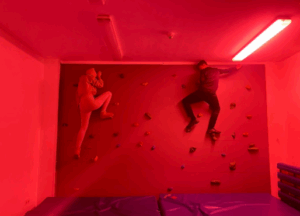
From 2023 onwards, the collaboration followed a consistent annual rhythm, with annual job-shadowing placements in Herne, learning from centres such as H2O, Pluto, and Die Wache, and reciprocal staff-planning visits, with youth leaders exploring Democracy, Tolerance, and Polarisation. By March 2025, the professional exchange deepened when two German youth workers visited Pontefract, one completing a week-long placement with EYAM CIC.
In August 2025, Pontefract hosted ten German young people and four staff for a five-night visit, which included youth club activities and visits to Leeds, Whitby, and local heritage sites. A pre-planning visit in October 2025 prepared for the next outbound exchange to Herne in 2026, ensuring the continuation of the partnership.
Supported by the Partnership Visit Fund and Instant Impact grants.
Find out more about the partnership in the videos below!
- Open to applicants from:
- All UK
- Open to:
- Youth
- Youth Workers
- Relevance:
- Youth Groups
The Environment, Peace, and Music
Who: Jugendorchester Stadt Karlsruhe (JOK) and Nottingham Music Service’s Robin Hood Orchestra (RHYO)
Participants: orchestra members of 12 – 20 year olds
Project theme: Exploring the environment, peace and conflict through music
Outcomes:
- Successful collaboration between the orchestras in rehearsals and activities, culminating in joint concerts showcasing their work.
- Reflections and developing of understanding of the music industry and its impact on the environment and peace.
- Strengthening of youth partnership, with future visits planned.
Grant: Instant Impact Plus
Residential in the Black Forest
Nottingham Music Service’s Robin Hood Orchestra (RYHO) and Jugendorchester Stadt Karlsruhe (JOK)’s partnership goes back to 2009. The orchestras meet regularly either in Germany or England, and 2024’s exchange was a joint trip to the Black Forest, with the final days spent in Karlsruhe.
This year’s exchange set out to provide a rich, cultural experience to the orchestra members that enhanced their musical talents through rehearsals ahead of a joint concert, whilst also exploring the topic of the environment and global warming through thematic workshops and activities. This incorporated their passion for music by examining the music industry and its impact on the environment. They also looked at themes of peace and cooperation in Europe.
For the first three days, the two orchestras stayed together in a youth hostel in the Black Forest, involving rehearsals, sightseeing, hikes, and thematic discussions and workshops. There was time for informal activities for the young people together to know one another and form friendships, such as by singing by a bonfire!
“I really enjoyed how for the first few days when we were in the Black Forest, we had rehearsals every evening. I mean at the time I would think I’m tired, but it gave me time to talk to the players around me and get to know them better.”
Despite that they only had a few days together to practise their orchestral arrangements, the orchestras put on remarkable performances at venues such as St Konrad’s Church, with the Mayor of Karlsruhe in attendance. The joint rehearsals allowed the players to learn from one another and experience different conducting styles and exercises.
The Environmental Impact of the Music Industry
Throughout their discussions on the environment and the music industry, the young people focused specifically on music tours. They discussed the disadvantages, such as the fuel emissions and increase in single-use packaging, and also highlighted the benefits of music tours, such as boosts to local economies, and a more varied cultural representation in the arts. They compiled a set of key recommendations for reducing environmental impact, including using transport options that have a small carbon footprint, encouraging climate-friendly diets, and improving infrastructure for cycling.
On the topic of peace, they examined the root of conflict and considered how music can promote unity by bringing people together, and developed ideas on how to promote this further. Their recommendations included further collaboration between youth orchestras across Europe and diversifying repertoires and music styles performed, whilst overall incorporating cultural learning into school and improving access to music education. Their ideas hopefully will have long-lasting impacts, as they will be shared with local council officials in Nottingham and Karlsruhe.
“I think I have an improved sense of adaptability in getting used to a different rehearsal environment, with new people and a different conductor. I’ve learnt a lot about German customs and specific information about the country, e.g. their recycling system, which has been an interesting insight into how a different country is trying to reduce waste.”
The residential experience in the Black Forest brought the young people together to learn about each other’s cultures, daily life, and perspectives on the chosen topics. This led to the young people developing their confidence, self-esteem, and overall resilience when presented with new situations. Additionally, they enhanced their musical talents through the joint rehearsals and learning from one another about different genres and styles.
Since the exchange, the participants have kept in touch digitally. Not only was this a worthwhile experience for the young people involved, the exchange has been pivotal in strengthening ties between the partner orchestras and the return visit is already planned.
“Young people from RYHO and JOK benefited from discussing topics important to them, sharing their perspectives and gaining insight into others’ opinions and ideas.”
- Open to applicants from:
- England
- Open to:
- Youth
- Relevance:
- Youth Groups
The Gimagine Award for Duke of Edinburgh Award
Discover the Gimagine Award, the first German learning programme to become an approved activity for the Duke of Edinburgh (DofE) Award skill section. This opportunity is for those learning German from scratch or those who want to improve their skills, with Friends of the Goethe-Institut UK (FGI-UK) now an Approved Activity Provider (AAP).
- Open to applicants from:
- All UK
- Relevance:
- Secondary Schools
- SEN
- Youth Groups
European Youth Engagement in Heritage
Who: Young Producers (Tees Valley Museums) and Critical Young Friends (Jugend Museum Schöneberg, Berlin)
Participants: museum youth group for 16-25 year olds
Project theme: youth engagement in heritage
Outcomes:
- Increased awareness and understanding of the heritage sector in Europe.
- Development of communication, critical thinking, and presentation skills.
- Collaboration with partners digitally and in-person, with inspiration sparked for a UK event.
Grant: Instant Impact Plus
A New Partnership
An interest in connecting with like-minded young people to establish an exchange blossomed into a new partnership between two museums’ youth groups. After researching different museums across Europe, the Young Producers connected with Critical Young Friends due to their shared passion for history. This digital link led to an invitation to Critical Young Friends’ conference on young people and museums, and to participate on a panel.
The aim of the visit was to gain new insights on youth engagement in museums, culture and heritage, whilst encouraging collaboration to strengthen the new youth partnership. Prior to the visit to Berlin, participants got to know one another via
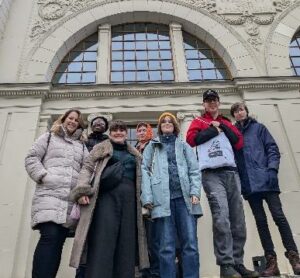
video calls and Café Connect.
Visiting Berlin
During the conference, the young people engaged in many workshops and activities on youth participation, discussing barriers to engagement and how different museums across Europe are responding to this.
They also took part in city tours led by their exchange partners, and visited other museums to expand on their knowledge of German history and culture. One exhibition called “Protest”, co-designed and curated by their partners, sparked ambitious ideas for designing their own exhibit in the UK.
“I enjoyed meeting other youth groups the most as it gave me insight into how they interact with their own heritage and culture. It also gave us a great chance to discuss different ideas for our respective museums and galleries as well as talking about the struggles we each face.”
The exchange developed the Young Producers’ knowledge and understanding of youth engagement in museums through sharing their experiences and learning from their peers. They enhanced their critical thinking skills and cultural awareness through comparing the heritage sectors on an international level. Through leading workshops and engaging with their partners, the participants developed their communication and presentation skills.
Future Plans
Since the visit, the youth groups have stayed in touch by working together on digital projects. The Young Producers are also planning to organise their own conference whilst hosting their exchange partners for the return visit.
“I enjoyed the most getting to meet new people and spend time with people I wouldn’t normally have a chance of meeting/spending time with. I loved every moment of it and can’t even put into words how grateful I am that we get opportunities like this.”
- Open to:
- Youth
- Youth Workers
- Relevance:
- Youth Groups
UK German Connection’s Partner Finder
Are you thinking about setting up a link with a German school or youth group? We offer a matching service through registering your institution on our Partner Finder form. Following this, we will be in touch with the details of a partner based on the information your provide at registration.
More information on our other partnership services
- Open to applicants from:
- All UK
Still & Sparkling: UK-German Youth Newsletter
Do you know any aspiring writers or content creators? We’re looking for young people to contribute to future editions of our youth newsletter, Still & Sparkling. It could be a guide to German films, the low-down on music from Scotland, a video tour of their school – anything to help young people engage with the other culture or share their own, and ultimately bring young people together over shared interests. Young people can also subscribe to receive future editions.
- Open to applicants from:
- All UK
- Open to:
- Secondary Pupils
- Students
- Youth
Instant Impact
The Instant Impact grant supports first-time visits for groups of young people to a partner school or youth group in Germany. Funding of normally up to £2,500 is available, depending on the overall costs of the visit.
We have also added an ‘Instant Impact Plus’ option, which will provide the same level of funding as the Flexible Funding Scheme (up to £5,000.00 per applying institution) for exchanges based on joint thematic projects.
- Open to applicants from:
- All UK
Partnership Visit Fund
The Partnership Visit Fund supports staff planning visits to set up new or foster on-going partnerships between schools and youth groups in the UK and Germany. Funding of normally up to £1,000 is available, depending on the overall costs of the visit.
- Open to applicants from:
- All UK
Planning for a youth-led exchange!
Increasing Employment Opportunities
Stiftung SPI and CCRF are youth programmes in Brandenburg and Belfast, working with young people from disadvantaged backgrounds to improve their prospects through employability projects. In both countries, many of the young people have never been abroad and so an exchange was an excellent opportunity to broaden their horizons and look beyond the borders of their hometown. With similar values at the core of the youth work in Brandenburg and Belfast, project ideas flowed and the two groups shared similar desired aims and outcomes of their planned exchange.
Establishing a partnership face-to-face
As this was a new partnership, it was essential that both sides were able to discuss the planning process face-to-face, allowing them to explore joint areas of interest and work with the young people directly. Two youth workers from Brandenburg travelled to Belfast to meet with the coordinators from their new partner youth group. The trip began with the chance to meet the young people, exploring initiatives and projects in Belfast and discussing possibilities for joint initiatives.
Young people at the heart of decision-making
It was clear from the outset that both CCRF and Stiftung SPI wanted to actively involve the young people in the planning process. The young people would be the main beneficiaries of the exchange and it was important to both groups that the activities focus on their individual and unique experiences, boost their confidence and communication skills, and ensure tailored outcomes. During their trip, the youth workers spent time observing and interviewing the young people at CCRF to find out what they would like to gain from the exchange and their ideas for activities and project themes.
From an idea to a fully-formed plan
Through their discussions during the trip, details of the project were finalised and they have now decided to involve two specific groups of young people: young mothers and teenagers.
The groups also came up with a project theme: ‘Grenzerfahrungen’ or experiences of borders/barriers. With Stiftung SPI located in Brandenburg and CRRF located in Belfast, both groups are ideally situated to explore the theme from both a personal and a wider perspective. The first leg of the exchange will focus on borders between social and economic states, against the historical backdrop of a divided Berlin and the return visit will focus on cultural and social borders, such as those experienced by different religious groups in Northern Ireland. Excursions to the Peace Walls, as well as Dublin will extend the theme to the political background and the notion of European Identity. Alongside this, the exchange itself will address the relationship between the UK and Germany, challenging the young people’s notion of ‘other’ and providing them with a unique opportunity to overcome personal barriers.
Planned and ready to go
For both groups, the planning visit was a great success and resulted in concrete foundations for their exchange! In particular, the trip allowed both groups to strengthen their partnership, get to know each other and the local area, as well as providing a renewed enthusiasm for cultural and thematic exchange between the young people in both the UK and Germany.
Partnership visit top tips
The two youth workers from Stiftung SPI share their top tips for an effective planning visit:
- Plan time for face-to-face discussions in both formal and informal settings.
- Get to know your partners and the participants in the exchange. Try to experience their world as much as possible!
- Plan to spend time observing and interacting with the young people.
- Allow the young people to actively participate in the planning of future exchange activity.
- Open to applicants from:
- All UK
- Open to:
- Youth
- Relevance:
- Youth Groups